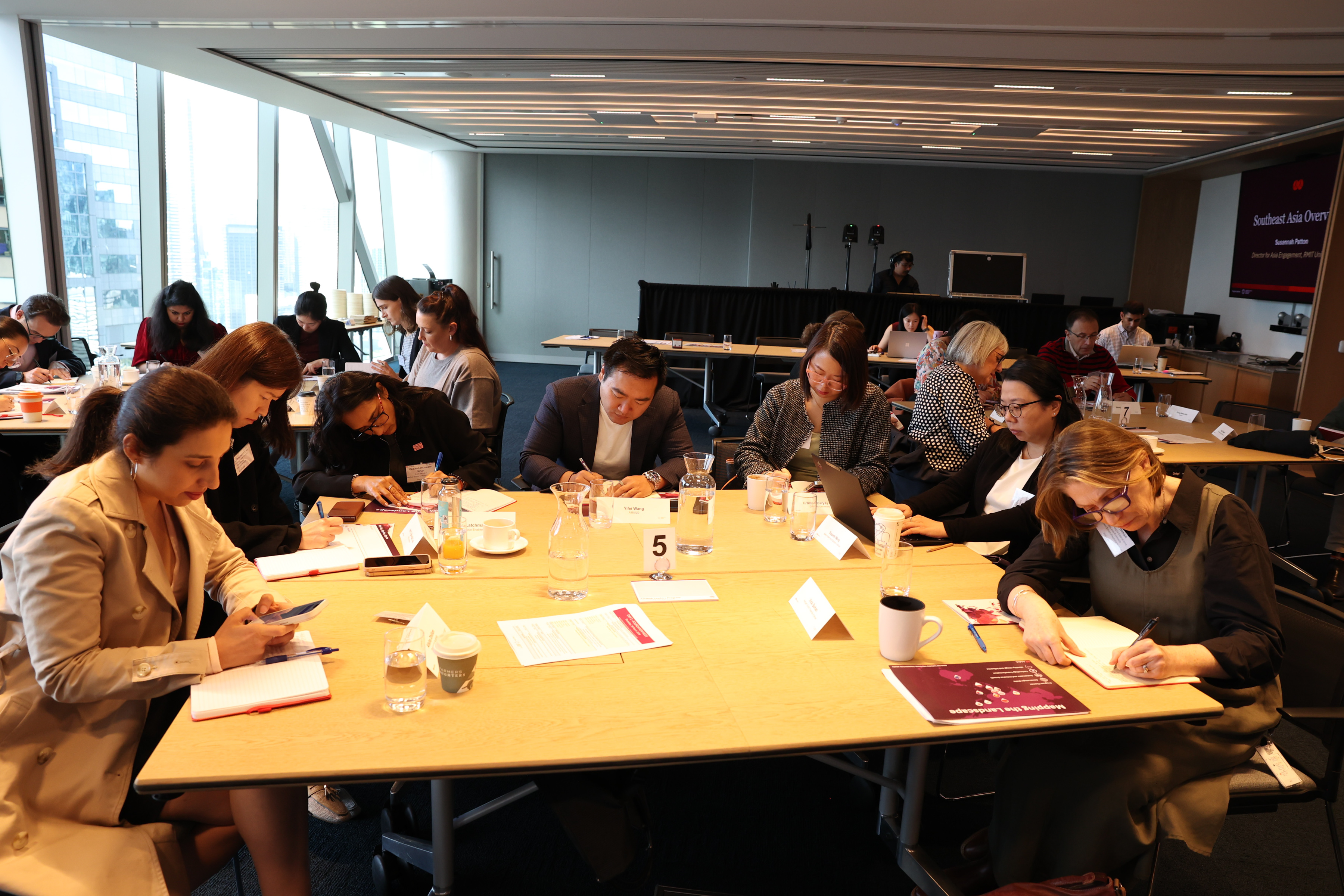
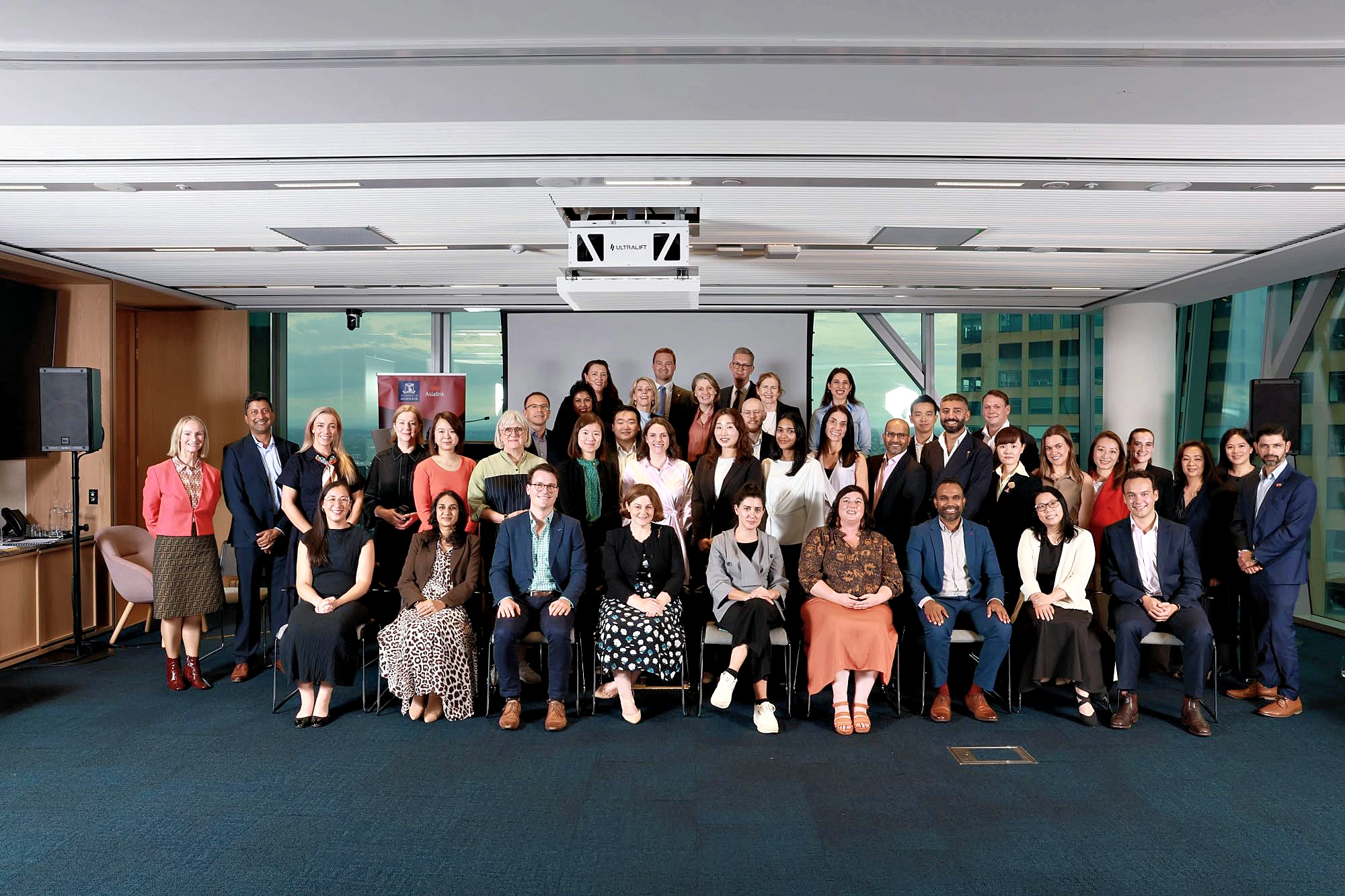
AIBUILD recently participated in Asialink Leaders 2026, joining a cross-sector group of leaders working through what Artificial Intelligence leadership and digital transformation in Australia, and specifically Victoria, actually looks like beyond just strategy.
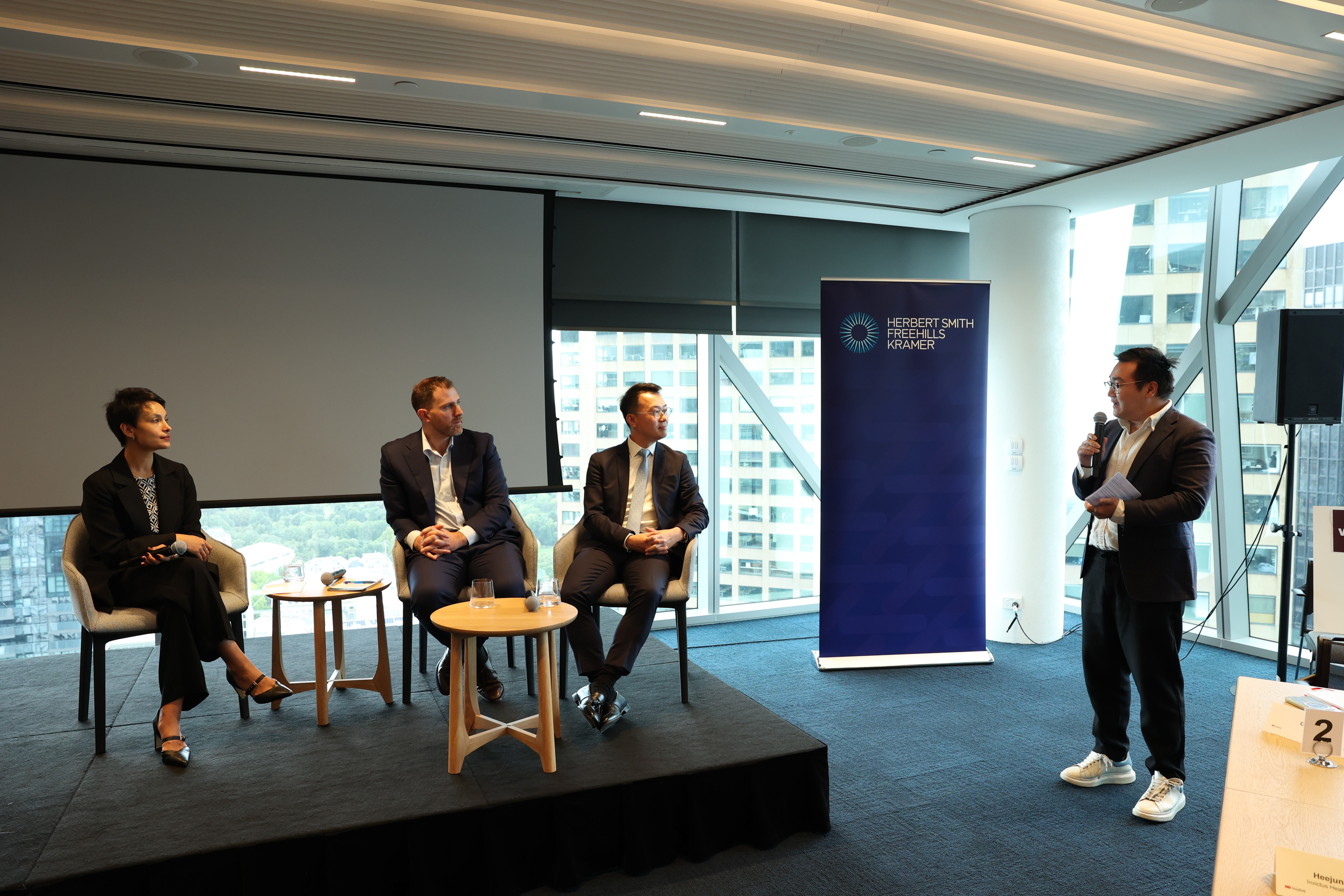
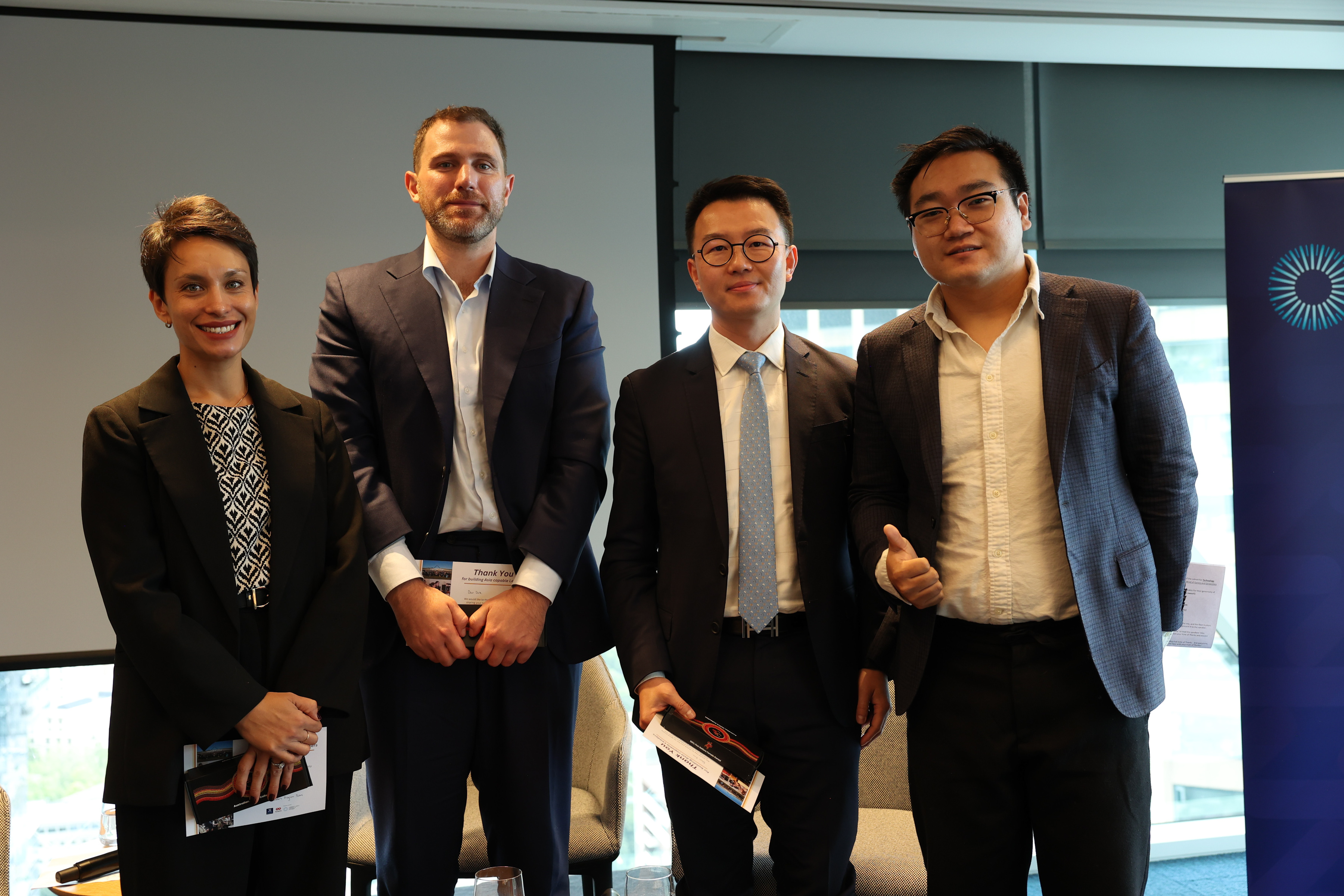
As part of the opening session of the Technology Transformation stream, AIBUILD was honoured to deliver a Vote of Thanks. But even more valuable than the formalities were the conversations happening around the event; particularly the shift in where organisations are getting stuck with AI integration.
12 months ago, most discussions centred on understanding AI’s potential, but that’s no longer the barrier.
Now, the friction shows up when organisations try to move from knowing to deploying with knowledge.
Rethinking risk in AI leadership
A consistent theme throughout this year’s Asialink Leaders was how organisations approach risk.
In many cases, risk is still treated as something to eliminate before deployment. In practice, that leads to stalled initiatives, extended pilot phases, or decisions that never progress beyond internal review.
But in applied environments, particularly across infrastructure, healthcare, and public services, eliminating risk isn’t an option; the only alternative is learning how to work within it.
AI leadership, in this context, is less about setting vision and more about making decisions under imperfect conditions. It involves:
- Moving forward with partial information rather than waiting for certainty
- Structuring deployments so risk is contained and observable
- Building systems that improve through use, not just pre-launch testing
- Accepting that governance and frameworks need to evolve alongside implementation
This is a more demanding model of leadership, but it’s the one required to unlock meaningful technology innovation in Victoria and across Australia.
From discussion to deployment
One of the strengths of Asialink Leaders 2026 was the diversity of perspectives in the room, government, academia, media, and industry, all engaging with the same set of challenges from different angles. What’s changing, though, is the level of alignment across sectors. There’s a growing recognition that AI capability alone is not enough; the focus is now shifting toward operability; how systems function over time, within real constraints, and alongside human decision-making. For AIBUILD, this is where applied AI either delivers value or falls short. Systems need to integrate into existing workflows, not sit alongside them, they need to produce outputs that are useful in context, not just technically accurate, and they need to continue performing under changing conditions. This all requires ongoing collaboration across sectors.

Looking ahead
As Asialink Leaders 2026 continues, including upcoming sessions in Canberra, the conversation is becoming more grounded, and more useful.
Australia is well-positioned to lead in AI, particularly with Victoria’s growing focus on technology innovation. However, now – leadership will be defined less by strategy and more by execution: how effectively organisations can move systems into production, keep them running, and adapt them over time.
For AIBUILD, these are the problems we work on every day, and the ones that will ultimately determine the success of digital transformation efforts across the country.
To learn more about how AIBUILD is delivering applied AI systems in real-world environments, get in touch with our team at support@aibuild.com